
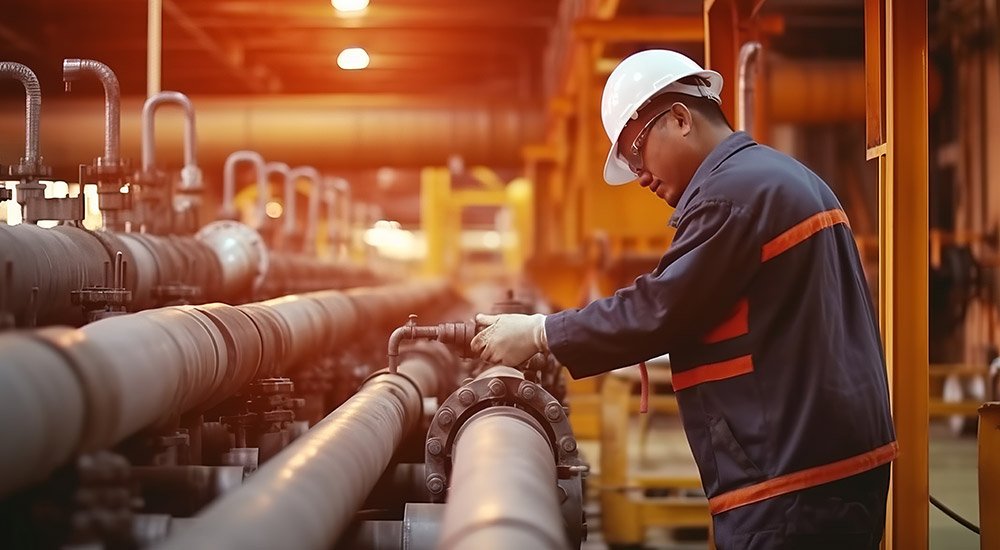
How smarter approaches to protection can simplify inspections and extend service intervals
Harsh industrial environments place constant pressure on assets, maintenance teams, and operational budgets. Offshore installations, marine infrastructure, power generation facilities, and heavy industrial plants all face the same challenge: how to maintain reliability when exposure to corrosion, moisture, vibration, and limited accessibility is unavoidable.
For many operators, maintenance burden has become one of the most significant contributors to operational cost and downtime. Reducing this burden is no longer only a question of efficiency – it is a strategic necessity.
1) The Hidden Cost of Maintenance Complexity
Maintenance is often measured in scheduled tasks and inspection intervals, but the true cost runs deeper. In demanding environments, maintenance activities frequently involve:
• Restricted access and complex logistics
• Safety-critical work at height or in confined spaces
• High dependence on specialized personnel and equipment
• Production interruptions and work permit constraints
Over time, these factors compound. Even well-planned inspection regimes can become resource-intensive and disruptive, particularly when corrosion-driven degradation accelerates faster than expected.
2) Why Harsh Environments Demand a Different Approach
Conventional maintenance strategies are typically designed around periodic inspection and intervention. While effective in controlled conditions, they become less efficient when assets are continuously exposed to aggressive environments.
Saltwater, humidity, temperature fluctuations, pressure cycling, and vibration increase degradation rates – especially at bolted connections and sealing interfaces. These areas often require repeated inspection, retightening, surface treatment, or component replacement.
In such conditions, reducing maintenance burden requires more than improved planning. It requires rethinking how assets are protected from the outset.
3) Protection That Reduces Intervention
A smarter approach to maintenance focuses on minimizing the need for intervention rather than optimizing the intervention itself. When critical interfaces are effectively protected, degradation slows, inspection findings stabilize, and service intervals can be extended with confidence.
This approach supports:
• Fewer inspection findings related to corrosion or leakage
• Reduced need for disassembly and rework
• Lower exposure of personnel to hazardous environments
• More predictable maintenance schedules
By addressing vulnerability at the interface level, operators can significantly reduce recurring maintenance demands.
4) Simplifying Inspections Through Stability
Inspection regimes are most efficient when asset conditions remain stable over time. Frequent changes, unexpected degradation, or inconsistent findings increase workload and uncertainty.
Effective long-term protection enables:
• Clearer inspection outcomes
• Reduced corrective actions
• Easier compliance with integrity management requirements
• Greater confidence in extending inspection intervals
For asset owners and operators, this translates into fewer surprises and more control over maintenance planning.
5) Extending Service Intervals Without Compromising Safety
Extending service intervals is often viewed as a risk. However, when supported by robust protection strategies, it becomes a controlled and defensible decision.
Smarter protection solutions allow organizations to:
• Base interval extensions on condition stability rather than minimum schedules
• Reduce dependency on frequent manual inspection
• Maintain safety and compliance while lowering operational load
This balance is particularly important in offshore and remote installations, where every maintenance activity carries a high logistical and safety cost.
6) Maintenance Efficiency as a Competitive Advantage
In today’s industrial landscape, maintenance efficiency directly affects competitiveness. Lower maintenance burden means:
• Higher asset availability
• Reduced operating expenditure
• Improved workforce utilization
• Stronger safety performance
Organizations that successfully reduce unnecessary maintenance gain flexibility and resilience – especially in volatile operational and market conditions.
7) Aligning Protection with Long-Term Operations
Reducing maintenance burden is not about doing less; it is about doing what matters most. Long-term protection strategies support modern asset integrity models by shifting focus from recurring correction to sustained performance.
By protecting critical components and interfaces against environmental stress, operators can simplify inspections, extend service intervals, and focus maintenance resources where they deliver the highest value.
8) A Smarter Path Forward
As industrial environments grow more demanding and operational expectations rise, maintenance strategies must evolve. Smarter protection is not an add-on – it is a foundational element of efficient, reliable operations.
Reducing maintenance burden through intelligent protection allows asset owners to operate with greater confidence, lower risk, and improved control over both performance and cost.
Norvion develops solutions aimed at reducing maintenance burden in harsh industrial environments. Our approach focuses on limiting the need for repeated intervention by protecting critical interfaces where corrosion and degradation typically occur. Through preventive measures at interface level, we seek to support more stable asset conditions, simplified inspections, and extended service intervals over time.